Over the weekend, a man who worked for my family’s business died in a firework related explosion.
I have a very complicated relationship with death and when I heard this news, I could hardly breath. I sobbed for Tony and his family and the years on earth he would not see. I cried for the injustice of it all.
Tony’s death reminded me of two things – there is good in the world, but there is also bad. I (we) so badly want it all to be good – we are shaken to the core when confronted with the bad. Death, cancer – these things are dark and scary – they call for a kind of brute strength that’s almost impossible for humans to understand.
But EVEN IN THE BAD – there is good. Little nuggets of good that strengthen us and carry us. The grace of God that gives us peace (sweet, unfathomable peace), the wonderful people who surround and support (earth angels), the little miracles that are there when we look for them (sunrises, laughter). The bad tries soo hard to rob us of the good. But if we remind ourselves to look – we will see (good).
Tony H – may you rest in heavenly peace.
One of my “goods” is my newfound path to healthy living. My latest inquiry is into local vs. organic produce. I love to visit the Holland Farmer’s Market. It’s one of my happy places. The produce is wonderfully fresh and oh so pretty! (and the flowers, I love the flowers)
There is no question that local produce, freshly picked, looks and tastes better than grocery store produce, even if the grocery store sells organic. Organic strawberries from California (picked who knows when) or local strawberries picked yesterday? How do they measure up?
Firstly, to avoid chemicals altogether, organic is your best bet. But, there are some other factors to consider. Small farmers selling at your local farmer’s market may be using less pesticides than a large, industrial operation – they may even be partially organic. It’s a good idea to ask the growers directly about which practices they employ. I spoke with a few of the local farmers at our market and they said that while they do use chemical sprays when needed, they try to use them sparingly. Also, fruits and veggies are more nutrient dense the closer to picking they are consumed.
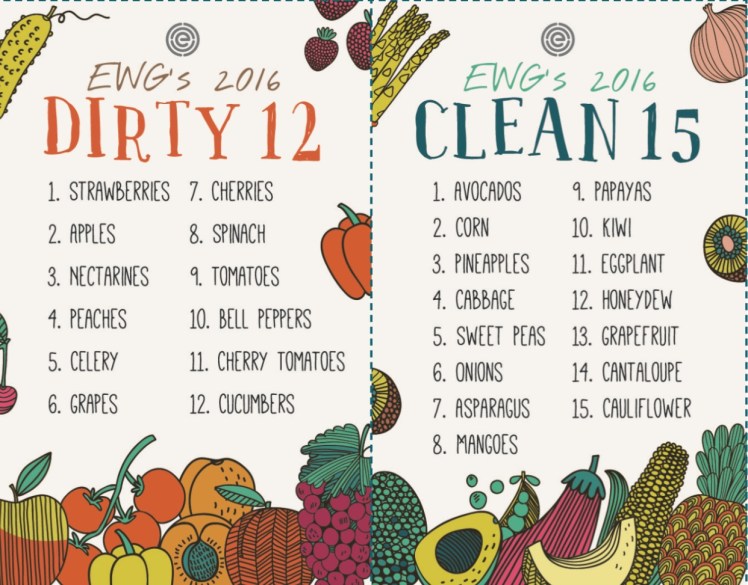
Another thing to consider is buying certain produce items local and certain items organic. The EWG has a list of the “Dirty Dozen” (produce that should be bought organic) and the “Clean Fifteen” (produce that either requires less chemical spray during growth or is less porous and offers higher resistance). Also, you may want to buy organic the fruit and vegetables you eat daily and try local for the ones you consume only on occasion (like asparagus or sweet corn).
You may want to consider joining a local CSA – Community Supported Agriculture. These organizations allow you to buy a “share” in their farm. Each week, you receive an array of seasonal veggies. Most farm shares use organic practices, although they may not be certified. I just recently joined a CSA called the Eighth Day Farm in Holland. My neighbors are members and I was very impressed with the quality and selection that they offered. I am excited to learn and experience a variety of new veggies (some I just learned how to pronounce).
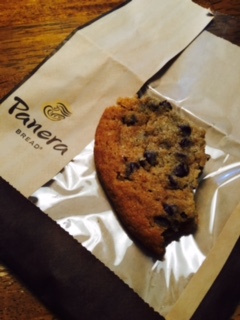
As I sit here, thinking of an appropriate way to conclude this blog, I am eating Coco’s chocolate chipper cookie from Panera Bread. The irony is not lost.
I may be trying to “know it all”, but there will always be room for chocolate. xoxo
 ginghamandgrace
Chocolate has always been the one thing that I could not completely give up. I actually found a really yummy dairy free chocolate chip. Miss you!
LikeLike